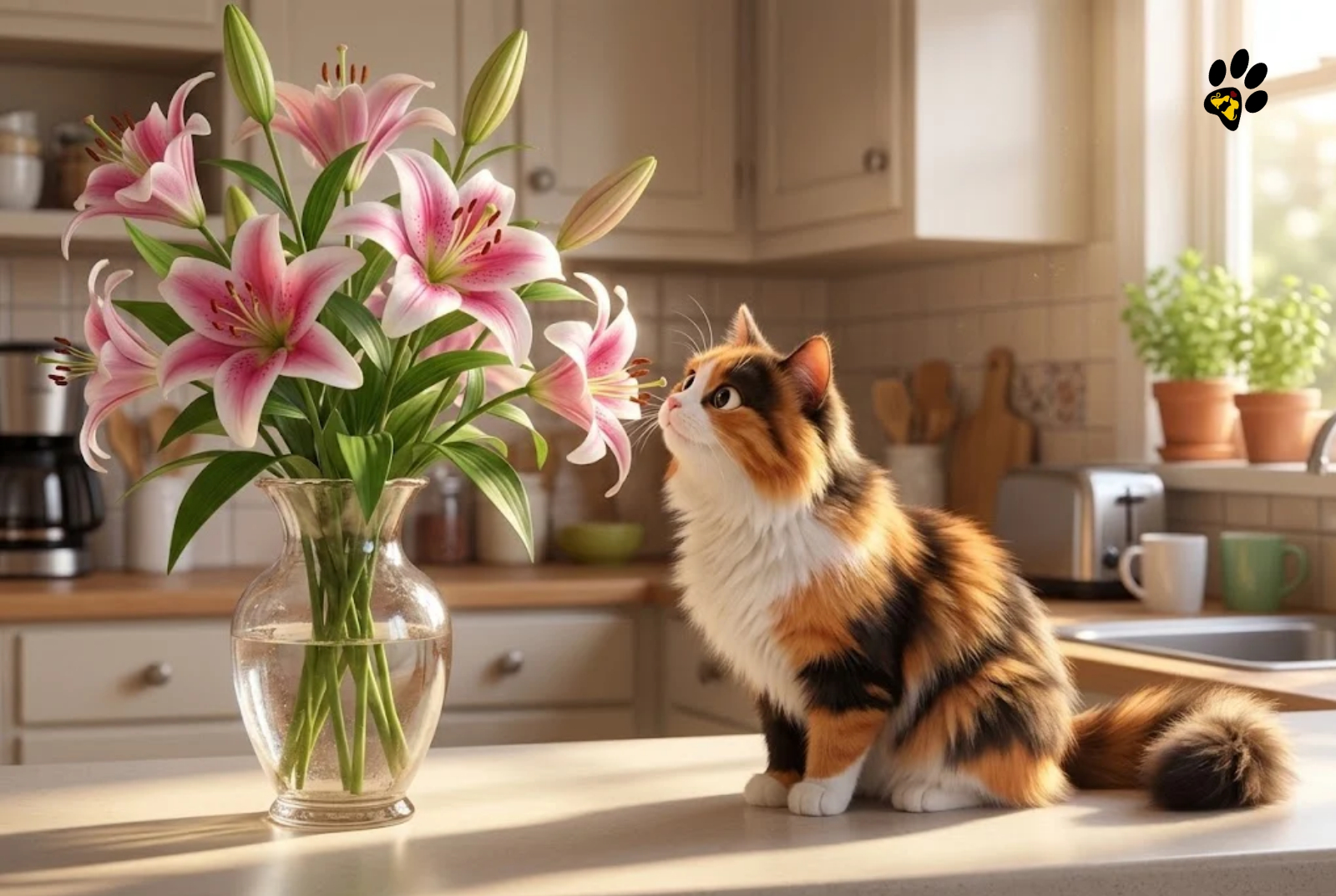
Indoor Safety Part 2: Toxic Houseplants
Listen to this article:
Bringing a fresh bouquet of flowers or a lush new potted plant into your home can brighten up any room. However, if you share your home with pets, you must be extremely careful about what you place on your counters and windowsills.
Some of the most popular indoor plants are hiding deadly secrets. For our feline friends in particular, one common flower stands out as an absolute emergency waiting to happen.
The Lethal Lily (Cats Only)
An Absolute Emergency
If you have a cat, true lilies (like Tiger, Day, Asiatic, Easter, and Japanese Show lilies) should never enter your home. They are severely toxic to felines.
This isn't just about a cat eating a leaf. Every part of the lily is deadly: the petals, the leaves, the stem, and especially the pollen. Even if your cat brushes past the flower, gets pollen on their fur, and licks it off later, it can cause acute and often irreversible kidney failure within 36 to 72 hours. Even drinking the water from a lily vase is enough to be fatal.
Note: Dogs can get an upset stomach from lilies, but they do not suffer the fatal kidney failure that cats do.
Other Common Indoor Hazards (Dogs & Cats)
Dieffenbachia (Dumb Cane)
A very popular, broad-leafed indoor plant that contains microscopic, needle-like calcium oxalate crystals. If a dog or cat chews on a leaf, these crystals shoot into the soft tissues of their mouth, causing intense pain, swelling, and drooling. In severe cases, the swelling can block their airway.
Indoor Sago Palms
Sometimes kept as small indoor ornamental plants, Sago Palms are highly toxic to both dogs and cats. The entire plant is poisonous, but the seeds (or "nuts") carry the highest concentration of toxins, which can lead to severe liver failure.
The Kahu Philosophy: Pet-Safe Greening
You don't have to give up indoor plants to keep your pets safe! Instead of risky choices, opt for beautiful, pet-safe alternatives like Spider Plants, Boston Ferns, African Violets, or Parlor Palms. When gifting bouquets to friends with cats, always ask the florist to exclude lilies entirely. Keeping our homes safe is simply about making informed choices.