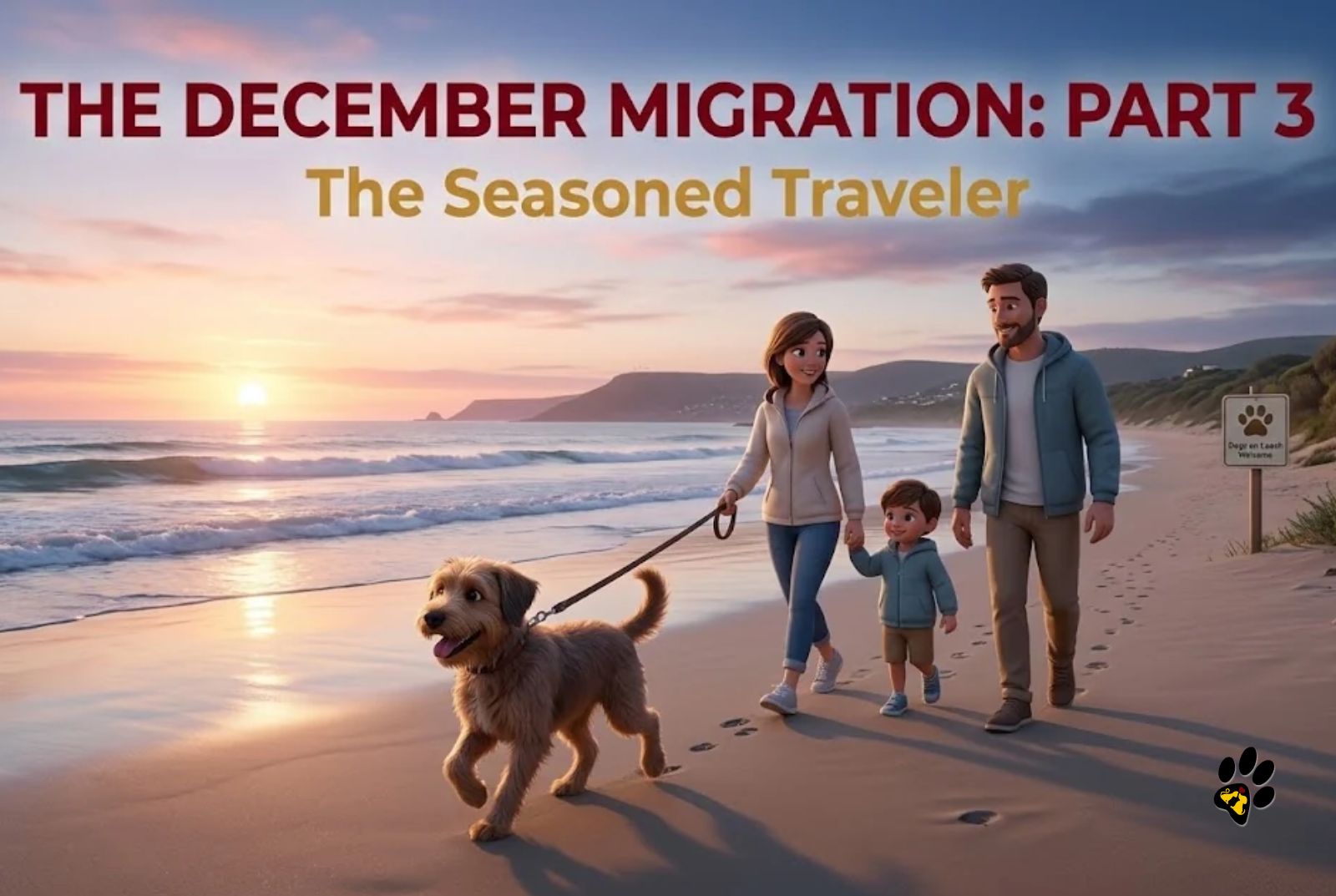
The December Migration, Part 3: The Seasoned Traveler (How to Holiday With Your Dog the Right Way)
Listen to this article:
In Parts 1 and 2, we looked at the harsh realities of the December rush: the severe emotional trauma of displacement, the danger of treating your dog like a suitcase, and the chaos of overcrowded holiday boarding and hosting facilities.
But we need to make an important distinction. There is a right way to holiday with your dog, provided they are a seasoned traveler. If you are going to bring your pet to the coast, true guardianship means planning the trip entirely around their well-being.
The Profile of a Traveling Dog
Not every dog is a traveler. A dog that is genuinely desensitized to travel usually grew up going on trips. They are confident in the car, adaptable to new environments, and view the family as their anchor, regardless of the location.
If your dog paces, pants, or gets highly anxious in new places, they are not a traveling dog—they are a homebody, and the most loving thing you can do is leave them safely at home. But if your dog loves the journey and settles quickly in new spaces alongside you, then a coastal vacation is absolutely possible.
The Pet-Friendly Basecamp
The golden rule of traveling with your dog is that they must live with you for the duration of the holiday.
You must secure verified, pet-friendly accommodation before you ever hit the road. Arriving at the coast and scrambling to find a place to dump your dog because your rental doesn't allow pets is exactly how animals end up traumatized in those cheap, overcrowded holding cells we discussed in Part 2. Your vacation rental needs to be their safe, predictable basecamp, where they stay right by your side.
When Boarding is the Only Option
If you absolutely cannot secure pet-friendly accommodation and must book your pet with a local host or kennel, your priority must be their well-being, not your budget.
Do not use pet care as a place to cut your holiday costs. You must make very sure that the facility or sitter is the absolute right fit for your specific animal. It must be a secure, protected, caring, and loving environment where they will be actively comforted. Choosing the cheapest available option often lands your pet in the overcrowded, high-stress nightmare situations we discussed in Part 2. True guardianship means investing in quality, professional care if they cannot be right by your side.
Using a Holiday Sitter the Right Way
Even when you bring your dog on a family vacation, there will be times you want to visit a non-pet-friendly beach, attraction, or restaurant. This is where a professional pet sitter comes in—but the dynamic must be completely different than dropping them off like luggage.
When you do it right, you book a professional sitter to come to your vacation rental. The dog stays in their secure "home away from home," and the sitter stays with them to provide companionship and de-escalate any anxiety while you go out for a few hours. They aren't abandoned in a strange facility; they are protected in their own space.
Anchoring the Senses
Even a seasoned traveler needs physical familiarity. When you pack for the coast, you must bring your pet’s world with them. Pack their own bed, their favorite unwashed blankets, their own food, and their own water bowls.
Animals process the world through scent and routine. Having their familiar smells surrounding them in a new holiday house provides a crucial psychological anchor that helps them feel secure.
The Kahu Standard
The December migration doesn't have to be a nightmare for pets. Whether you make the hard, loving choice to leave an anxious dog safely at home with their local sitter, or you responsibly bring a seasoned traveler to a pet-friendly coastal rental, the Kahu way is simple: your animal's mental and physical well-being must always dictate your holiday plans, not the other way around.