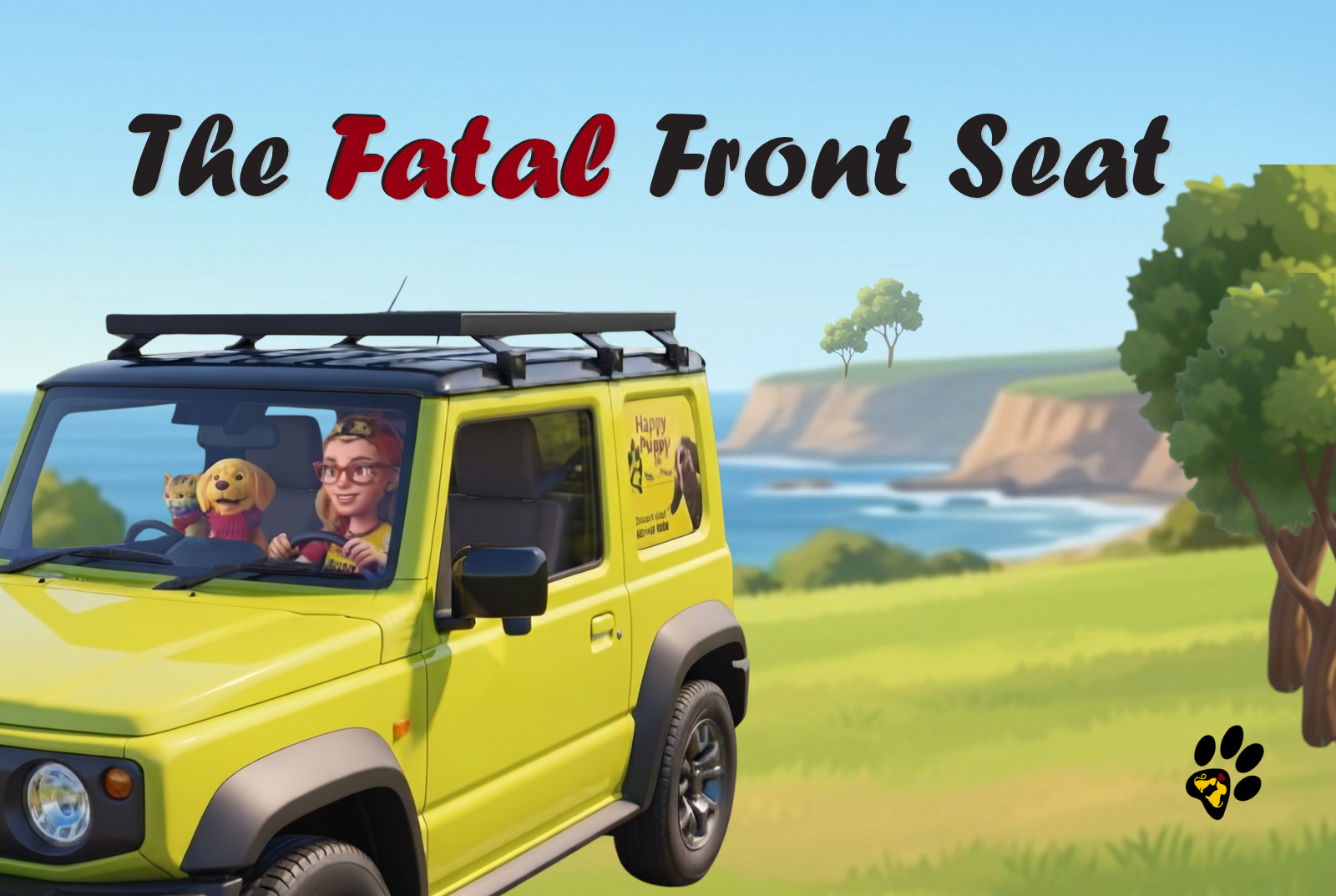
The Fatal Front Seat: Why True Guardianship Extends to the Car
We have all seen it: a happy dog with its head hanging out the window, ears flapping in the wind, or a tiny pup curled up fast asleep on its owner's lap while they navigate traffic. It looks cute, and as animal lovers, we naturally want our pets as close to us as possible.
But when it comes to road safety, prioritizing closeness over security is a dangerous gamble. True animal guardianship means making the hard choices to protect our pets, even when they just want to sit on our laps. Here is why an unrestrained dog in a vehicle is a tragedy waiting to happen.
1. The Airbag Catastrophe
Airbags are designed to save adult humans, deploying at speeds of up to 300 km/h in a fraction of a second. If a dog is on your lap or sitting in the front passenger seat when an airbag deploys, the force is devastating. The impact of an airbag can instantly crush a dog's ribs, cause severe internal trauma, or result in instant death. The front seat is simply not a survivable place for an animal in a collision.
2. The Projectile Effect and Dashboard Impacts
You do not even need to be in an accident to severely injure an unrestrained pet. A sudden slam on the brakes at just 50 km/h will send an unsecured dog flying forward. Without a seatbelt harness to distribute the force, they will slam head-first into the hard plastic of the dashboard or the windshield. This frequently results in concussions, broken bones, or fatal spinal injuries.
3. The Open Window Illusion
Dogs love the smells coming through an open window, but a moving vehicle is highly unpredictable. If a dog's prey drive is suddenly triggered by a passing cat, bird, or another dog, instinct takes over. Even the best-behaved dogs have been known to leap from moving vehicles. Additionally, a sudden swerve to avoid a pothole can easily throw an unbalanced dog straight out the window into oncoming traffic.
4. The Distracted Driver Risk
A pet moving around the cabin is a massive distraction. A dog on your lap can block your view of the side mirrors, bump your arm while you are steering, or worse, slip down into the footwell and become wedged under the brake or accelerator pedals. Keeping your dog securely in the back ensures you have full, unobstructed control of your vehicle.
Securing the Ride
As Kahu—guardians of our animals—we must advocate for their safety because they do not understand the physics of a car crash. The safest place for your pet is in the back seat, secured with a crash-tested canine seatbelt harness, or in a secured travel crate in the boot.
It might take them a few car rides to get used to being strapped in, but a moment of frustration is a small price to pay to ensure they make it home alive.